

Speed is an addiction. Whether you are gripping the steering wheel of a 125cc kart at 60mph or watching your real-time analytics spike, the obsession with “going faster” is universal.
As a developer and a racing enthusiast, I’ve realized that the principles used to win on the track are identical to the SEO Best Practices needed to rank #1 on Google. You cannot win a race with a heavy chassis, and you cannot rank with a bloated theme.
Here are **5 great karting tips for novice racers**, reimagined as essential lessons for high-performance website optimization.
1. Weight Reduction is Key (The “Bloat” Factor)
The Racing Lesson:
In karting, power-to-weight ratio is everything. Novice racers often load their karts with unnecessary accessories. Pros know that every ounce counts. A lighter kart accelerates faster out of corners and puts less stress on the engine.
The Digital Parallel:
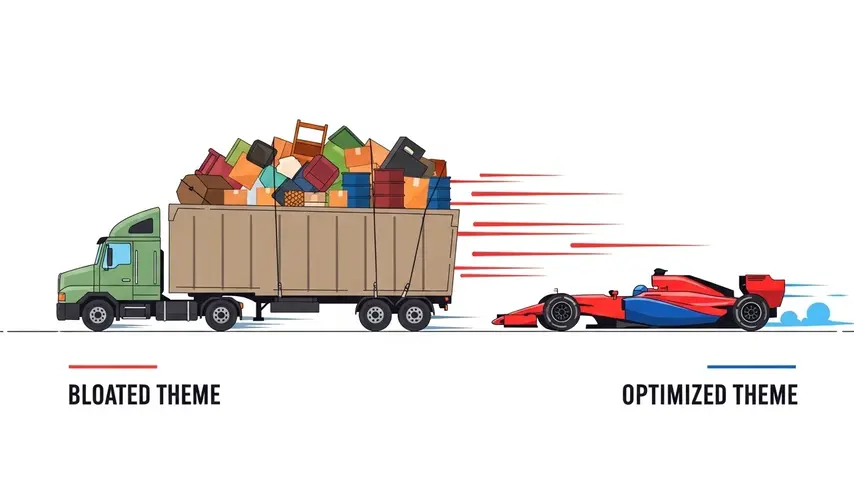
Your website works the same way. If you install 50 plugins when you only need 5, you are driving a heavy truck, not a race car. Unused CSS, heavy JavaScript files, and unoptimized images act as “dead weight” that drags your site down.
Actionable Tip: Audit your site today. If a plugin doesn’t directly contribute to user experience or revenue, delete it. Use tools like AccelerateWP to minify your code—think of it as stripping the interior of a car for race day.
2. Smooth is Fast (The “User Experience” Line)
The Racing Lesson:
Novices jerk the steering wheel aggressively. Pros drive smoothly. In racing, “sliding is slow.” The fastest way around the track is the “Racing Line”—the smoothest, most efficient path from entry to exit.
The Digital Parallel:
On a website, “jerky steering” is a bad Layout Shift (CLS). Have you ever tried to click a button, but an image loaded late and pushed the button down? That is the digital equivalent of spinning out on a track.
Actionable Tip: Ensure your theme has proper dimensions for images and ads to prevent layout shifts. A smooth experience keeps users on the “track” (your site) longer.
3. Momentum Maintenance (Caching Strategy)
The Racing Lesson:
Karts don’t have much horsepower, so maintaining momentum is critical. If you brake too hard, it takes forever to get back up to speed. You want to carry as much speed as possible through the corners.
The Digital Parallel:
Server Caching is your momentum. Without cache, your server has to build every page from scratch for every visitor (stopping and starting). With cache enabled, the page is already built and “moving,” ready to be served instantly.
Actionable Tip: Never disable your page caching. Use a preload feature to ensure your pages are always ready to serve at top speed.
4. The Engine Matters (Database Optimization)
The Racing Lesson:
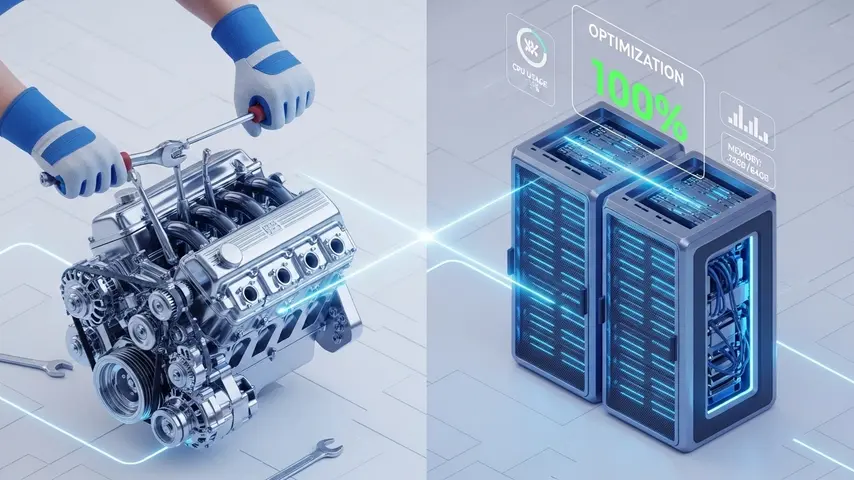
You can be the best driver in the world, but if your carburetor is clogged or your spark plug is dirty, you will lose. Regular engine maintenance ensures maximum output.
The Digital Parallel:
Your WordPress Database is the engine. Over time, it gets clogged with post revisions, spam comments, and transient data. A clogged database slows down query times, causing the dreaded “Time to First Byte” (TTFB) delay.
Actionable Tip: Schedule weekly database cleanups. Remove the “carbon buildup” (spam and revisions) to keep your engine revving freely.
5. Choose the Right Chassis (Theme Selection)
The Racing Lesson:
You cannot win a Formula 1 race in a tractor. The chassis (frame) determines the potential of the vehicle. If the frame is bent or poorly designed, no amount of engine tuning will fix it.
The Digital Parallel:
Your WordPress Theme is your chassis. Many themes look pretty but are coded poorly, loaded with heavy scripts that make high scores in Core Web Vitals impossible.
If you are serious about speed, you need a chassis built for performance. This brings us to our top recommendation for 2026.
Need a “Ferrari” Chassis for Your Blog?
We recently tested a theme that breaks all speed records while maximizing ad revenue. It’s the perfect balance of aerodynamics and power.
(Or if you prefer pure minimalism, check the SEO Next Theme)
Conclusion
Whether on the asphalt or on the internet, the rules of physics apply: Eliminate friction, optimize efficiency, and maintain momentum.
That old link about “Karting Tips” brought you here, but hopefully, you’re leaving with something faster—a high-performance website strategy. Treat your blog like a race car, perform your maintenance, and we’ll see you at the finish line (Page 1 of Google).


