
Five years ago, “virtual assistant” sounded like a niche gig for people answering emails from a beach somewhere. Today, it’s one of the fastest-growing remote career paths in the world — and businesses of every size are scrambling to find good ones.
If you’ve been searching for virtual assistant jobs remote, you’re not alone. Thousands of people are exploring this path every month. But here’s what most guides won’t tell you: the difference between people who land consistent, well-paying VA work and those who spend months applying with zero responses comes down to understanding what businesses actually need, where to find legitimate opportunities, and how to position yourself as someone worth hiring.
This guide covers all of it. No fluff, no generic advice. Just a clear, honest roadmap to finding and landing real virtual assistant job opportunities that pay well and let you work from anywhere.
What Exactly Does a Virtual Assistant Do?
A virtual assistant is a remote professional who provides administrative, technical, creative, or specialized support to businesses, entrepreneurs, or executives — all from a remote location.
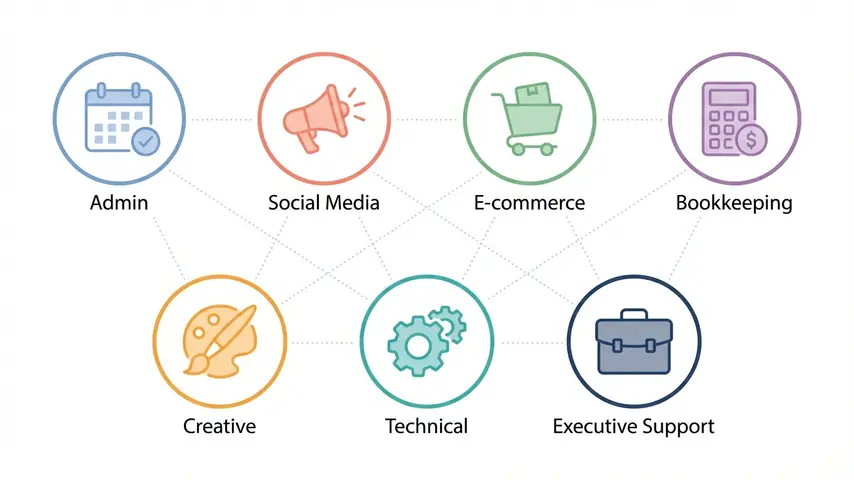
But that definition barely scratches the surface. The scope of VA work in 2025 has expanded dramatically. Here’s what modern virtual assistant roles actually look like:
| VA Specialization | Typical Tasks | Avg. Hourly Rate |
|---|---|---|
| Administrative VA | Email management, scheduling, data entry, travel booking | $10–$25/hr |
| Social Media VA | Content scheduling, community management, analytics reporting | $15–$35/hr |
| E-commerce VA | Product listing, inventory management, customer support, order processing | $12–$30/hr |
| Bookkeeping VA | Invoice processing, expense tracking, QuickBooks management | $20–$40/hr |
| Creative VA | Graphic design, video editing, content creation, presentation design | $15–$50/hr |
| Technical VA | Website updates, CRM management, tech troubleshooting, automation setup | $20–$50/hr |
| Executive VA | Calendar management, meeting prep, research, project coordination | $25–$60/hr |
Notice the range. A general admin VA earns $10–$25/hour. A specialized executive or technical VA earns $25–$60/hour. The takeaway? Specialization pays. The more specific your skill set, the more businesses are willing to pay — because they need someone who can solve a particular problem, not just “help with stuff.”
Why Businesses Hire Virtual Assistants (Understanding the Other Side)
Here’s something most VA job guides completely ignore: understanding why businesses hire virtual assistants gives you a massive advantage when applying and positioning yourself.
Business owners don’t wake up thinking “I want to hire a VA.” They wake up thinking:
- “I’m drowning in emails and can’t focus on growth.”
- “I need someone to handle my social media but can’t afford a full-time employee.”
- “My customer support response time is killing my reviews.”
- “I spend 3 hours a day on tasks that someone else could do for $20/hour.”
When a business decides to hire a virtual assistant, they’re buying back their time. They’re solving a pain point. If you can identify that pain point in your application and show exactly how you solve it, you’ll stand out from 95% of other applicants who just list generic skills.
This mindset shift — from “I need a job” to “I solve a specific problem” — is the single biggest factor that separates VAs earning $10/hour from those earning $40/hour.
Where to Find Legitimate Virtual Assistant Jobs Remote
Not all job platforms are created equal. Some are goldmines. Others are wastelands of low-paying gigs and sketchy postings. Here’s where serious virtual assistant jobs remote opportunities actually exist:
Dedicated VA Job Platforms
- Belay — One of the most reputable VA companies in the US. They hire bookkeeping VAs, admin VAs, and social media assistants. Competitive pay, but the application process is selective.
- Time Etc — UK-based but hires globally. Focused on experienced VAs with strong communication skills.
- Boldly — Premium VA service that hires for long-term, part-time positions. Higher pay but requires proven experience.
- Wishup — Growing platform that connects businesses with pre-vetted virtual assistants. Quick onboarding process.
Freelance Marketplaces
- Upwork — The largest freelance platform. Tons of VA jobs but also heavy competition. Build a strong profile and start with competitive rates to gain initial reviews.
- Fiverr — Better for productized VA services (e.g., “I’ll manage your inbox for a week” or “I’ll create 30 social media posts”). Package your skills as clear deliverables.
- PeoplePerHour — Strong for European clients. Less saturated than Upwork for certain VA niches.
General Remote Job Boards
- FlexJobs — Curated, scam-free remote job listings. Paid membership but worth it for the quality of postings.
- Remote.co — Free job board with a dedicated virtual assistant category.
- We Work Remotely — Popular board for remote roles. VA positions appear under operations and support categories.
- LinkedIn — Often overlooked for VA work, but many businesses post virtual assistant positions here. Set up job alerts for “virtual assistant remote.”
Direct Outreach (The Underrated Method)
Here’s what almost nobody does: reaching out directly to businesses that clearly need help but haven’t posted a job listing yet.
Find small business owners, coaches, consultants, or content creators on Instagram, LinkedIn, or YouTube who are clearly overwhelmed — posting inconsistently, slow to respond to comments, no systems in place. Send them a short, personalized message explaining exactly how you can help. No generic templates. No “Dear Hiring Manager.”
This approach has the lowest competition and the highest conversion rate because you’re solving a problem they already know they have.
Essential Skills and Tools Every VA Needs
You don’t need a degree to become a virtual assistant. But you do need a reliable skill set and familiarity with the tools businesses actually use.
Core Skills
- Written communication — Clear, professional, error-free writing is non-negotiable
- Time management — You’re managing someone else’s priorities alongside your own
- Organizational skills — Systems, processes, and attention to detail separate good VAs from great ones
- Problem-solving — Clients value VAs who find solutions without being told exactly what to do
- Tech adaptability — New tools and platforms emerge constantly; you need to learn quickly
Tools You Should Know
Every remote VA needs to be comfortable with collaboration and productivity tools. The specific stack varies by client, but these come up in almost every virtual assistant job listing:
- Communication: Slack, Zoom, Google Meet, Microsoft Teams
- Project Management: Trello, Asana, Notion, ClickUp
- File Management: Google Workspace, Dropbox, OneDrive
- Scheduling: Calendly, Google Calendar, Acuity
- Social Media: Buffer, Hootsuite, Later, Canva
- CRM: HubSpot, Salesforce, Dubsado
If you’re unfamiliar with the most common remote work tools, spend a week learning the basics of each platform. Most offer free plans that let you practice. This small investment of time dramatically increases your hireability.
Bonus: High-Value Skills That Command Premium Rates
Want to earn $30–$60/hour instead of $10–$15? Add one or more of these specialized skills:
- Video editing — Huge demand from YouTubers, coaches, and course creators. If you’re new to this, start by learning on free video editing software for PC — you don’t need expensive tools to build portfolio-worthy samples.
- Funnel building — Setting up sales funnels in ClickFunnels, Leadpages, or WordPress
- Email marketing — Managing campaigns in Mailchimp, ConvertKit, or ActiveCampaign
- SEO basics — Keyword research, on-page optimization, content briefs
- Automation — Building workflows in Zapier or Make to automate repetitive tasks
The pattern is clear: the more directly your skills connect to revenue generation or time savings, the more you can charge.
How to Land Your First Virtual Assistant Job — Step by Step

Step 1: Pick Your Niche
Don’t be a “general virtual assistant.” Be a “social media VA for real estate agents” or a “bookkeeping VA for e-commerce businesses.” Niching down feels limiting but actually makes you easier to find and easier to say yes to.
Step 2: Build a Simple Portfolio
You don’t need a fancy website. A clean Google Doc, Notion page, or one-page Carrd site showing your skills, tools you know, a brief bio, and 2–3 sample work pieces is enough to start.
Step 3: Create Profiles on 2–3 Platforms
Don’t spread yourself across 10 platforms. Pick two or three from the list above and optimize your profiles completely. Professional photo, specific headline (“E-commerce Virtual Assistant | Shopify & Customer Support Specialist”), detailed description of what you do and how you help.
Step 4: Apply Strategically
Quality over quantity. Ten thoughtful, customized applications will outperform 100 copy-paste ones every time. Address the specific pain points mentioned in the job post. Show you’ve read the listing. Suggest one small improvement you’d make immediately.
Step 5: Start With One Client and Deliver Exceptional Work
Your first client is your most important marketing tool. Over-deliver. Communicate proactively. Document your processes. A happy first client leads to referrals, testimonials, and a reputation that does your marketing for you.
What to Expect — Realistic Earnings and Growth
Let’s be honest about the numbers:
- Beginner VA (0–6 months): $8–$15/hour. You’re building experience and testimonials.
- Intermediate VA (6–18 months): $15–$30/hour. You’ve niched down and have proven results.
- Specialized/Expert VA (18+ months): $30–$60+/hour. You solve specific, high-value problems.
Most VAs reach the $20–$30/hour range within their first year if they specialize, invest in learning, and treat their VA work as a real business rather than a side gig.
The ceiling is higher than most people expect. Some executive VAs and specialized technical VAs earn six figures working with just 3–4 premium clients. It’s not common, but it’s very real.
Common Mistakes That Keep VAs Stuck
Before you dive in, avoid these traps that I see constantly:
1. Pricing too low for too long. Starting cheap to get experience is fine. Staying cheap because you’re afraid to raise rates is how you burn out. Raise your rates every 3–6 months as your skills and testimonials grow.
2. Being a generalist forever. “I can do anything!” sounds flexible. To clients, it sounds like you’re not particularly good at anything specific. Pick a lane.
3. Not setting boundaries. Remote work blurs the line between work and life. Set clear working hours, response time expectations, and scope of work — in writing — from day one.
4. Ignoring your own systems. You’re helping clients get organized. If your own task management, file storage, and communication systems are messy, your service quality will suffer eventually.
5. Waiting until you’re “ready.” You’ll never feel 100% ready. Apply now, learn on the job, and improve as you go. Every successful VA started before they felt qualified.
Frequently Asked Questions
What qualifications do I need for virtual assistant jobs remote?
No formal qualifications are required for most virtual assistant positions. What matters is demonstrable skills, reliability, strong communication, and familiarity with common digital tools. Specialized skills like bookkeeping, social media management, or video editing can significantly increase your earning potential and make you more competitive.
How much do remote virtual assistants earn?
Earnings range from $8–$15/hour for beginners to $30–$60+/hour for specialized or executive virtual assistants. The average intermediate VA earns between $15 and $30 per hour. Your rate depends on your niche, experience level, and the complexity of tasks you handle.
Where do businesses go to hire virtual assistants?
Businesses typically hire virtual assistants through dedicated VA agencies like Belay and Boldly, freelance platforms like Upwork and Fiverr, remote job boards like FlexJobs and Remote.co, or through direct outreach on LinkedIn. Understanding where your ideal clients look for help increases your chances of being found.
Can I become a virtual assistant with no experience?
Absolutely. Many successful virtual assistants started with zero professional VA experience. Focus on transferable skills you already have — organization, communication, tech comfort, writing. Build sample work, create profiles on two platforms, and start applying. Your first client won’t care about your resume as much as your willingness to solve their problem effectively.
What is the difference between a virtual assistant and a freelancer?
All virtual assistants are technically freelancers, but not all freelancers are VAs. A virtual assistant specifically provides ongoing support services — administrative, creative, or technical — usually to one or a few clients on a recurring basis. A freelancer might work on one-off projects like designing a logo or writing a single article. VAs tend to build longer-term working relationships.
Is virtual assistant work a sustainable long-term career?
Yes. The demand for remote support continues to grow as businesses of all sizes embrace distributed teams. Many VAs build sustainable careers by specializing, raising rates progressively, and transitioning into roles like online business managers or operations consultants. It’s a career path with a clear growth trajectory for those who treat it professionally.
The virtual assistant industry isn’t a trend. It’s a structural shift in how businesses operate. Companies that once hired full-time office staff are now choosing to hire flexible, skilled remote professionals — and paying well for it.
You don’t need a perfect resume. You don’t need years of experience. You need a specific skill set, the willingness to start before you feel ready, and the discipline to improve continuously. The opportunities are there. The question is whether you’ll take the first step today.