A new term keeps popping up in developer conversations, tech podcasts, and startup communities. People talk about “vibe coding” like everyone already knows what it means. But if you’ve encountered the phrase and felt a little lost, you’re not alone.
The concept is simple once you understand it. The implications, however, are massive.
This guide explains the full vibe coding meaning — where it came from, how it works in practice, why it matters for the future of software development, and whether it’s something you should care about even if you’ve never written a line of code in your life.
What Is Vibe Coding? The Origin Story
The term “vibe coding” was coined by Andrej Karpathy in February 2025. If that name sounds familiar, it should. Karpathy is one of the most respected figures in artificial intelligence — former Senior Director of AI at Tesla, founding member of OpenAI, and a Stanford PhD whose research shaped how modern neural networks learn.
His original post on X (formerly Twitter) described the concept with characteristic simplicity:
“There’s a new kind of coding I call ‘vibe coding,’ where you fully give in to the vibes, embrace exponentials, and forget that the code even exists. It’s possible because the LLMs are getting too good.”
That post went viral. Within weeks, “vibe coding” entered the mainstream developer vocabulary. But the vibe coding meaning goes deeper than a catchy phrase. It represents a fundamental shift in the relationship between humans and code.
Vibe Coding Meaning: A Complete Breakdown
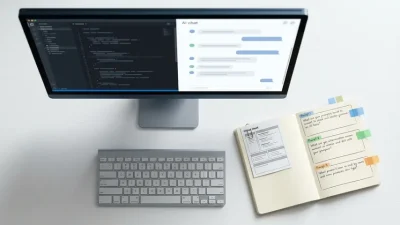
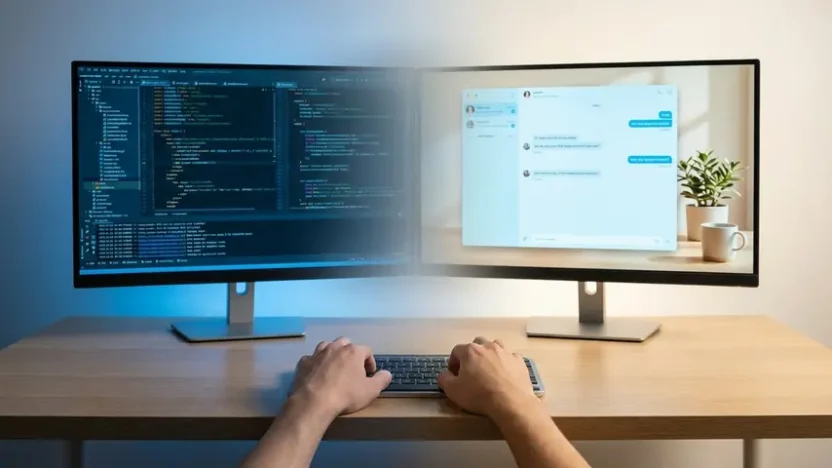
At its core, vibe coding meaning refers to a development approach where you describe what you want in natural language — plain English — and an AI model writes the actual code for you. You focus on the what and the why. The AI handles the how.
Let’s break that down into practical terms.
Traditional Coding
You open a code editor. You think about data structures, syntax, function names, error handling, and architecture patterns. You type every character manually. When something breaks, you read error messages, trace logic flows, and debug line by line. The process is precise, methodical, and often slow.
Vibe Programming
You open an AI-powered tool. You type something like: “Build me a task management app with drag-and-drop boards, user authentication, and a dark mode toggle.” The AI generates the entire application. You look at the result, suggest adjustments — “make the sidebar collapsible” or “add a deadline reminder feature” — and the AI modifies the code accordingly.
You might never look at the actual code. You interact with the output — the working application — and iterate through conversation rather than manual editing.
That’s vibe programming in practice. You’re directing, not typing. Guiding, not debugging. The “vibe” part captures the intuitive, conversational nature of the process. You describe the feeling of what you want, and the AI interprets that into functional software.
What Is a Vibe Code, Exactly?
When people ask “what is a vibe code,” they’re usually asking about the output — the actual code that gets generated through this process.
A vibe code is any piece of software created primarily through natural language prompts rather than manual programming. The human provides intent and direction. The AI provides implementation.
Here’s what makes vibe code different from traditionally written code:
- It’s generated, not authored. The human didn’t choose variable names, decide on architectural patterns, or write individual functions. The AI made those decisions based on its training data and the context of your prompts.
- It’s conversational. The code evolves through dialogue. Each prompt refines the output. The development process looks more like a chat transcript than a git commit history.
- It’s intent-driven. The code reflects what you wanted to achieve, not necessarily how an experienced developer would manually implement it. Sometimes the AI’s approach is better than what a human would write. Sometimes it’s worse. Often it’s just different.
- It’s fast. What takes a developer days or weeks to build manually can emerge from a vibe coding session in minutes or hours.
Understanding what is a vibe code also means understanding its limitations. AI-generated code can contain subtle bugs, security vulnerabilities, or inefficient patterns that aren’t obvious from the surface. The code works — but “works” and “works well in production at scale” are very different standards.
Vibe With Meaning: Why This Matters Beyond Tech
The phrase “vibe with meaning” captures something important about this movement. It’s not just a developer trend. It’s a democratization event.
For decades, building software required years of specialized education. You needed to learn programming languages, understand computer science fundamentals, and accumulate enough experience to build anything meaningful. The barrier to entry was enormous.
Vibe coding lowers that barrier dramatically. Consider who can now build software:
Entrepreneurs Without Technical Co-Founders
A business founder with a product idea can now build a working prototype without hiring a developer. They describe their vision, iterate through conversation with an AI tool, and produce something functional enough to test with real users. The “find a technical co-founder” bottleneck — which has killed countless startups — is dissolving.
Designers Who Think Visually
Designers have always been able to envision software. Now they can build it. Describe a UI layout, specify interactions, define animations — the AI translates visual thinking into working code. The gap between design mockup and functional prototype shrinks to almost nothing.
Domain Experts in Non-Tech Fields
A doctor who wants a patient intake form with specific clinical logic. A teacher who needs a custom quiz platform. A researcher who wants to automate data analysis. These people understand their problems deeply but traditionally couldn’t build their own solutions. Vibe programming changes that equation.
Content Creators and Marketers
Need a custom calculator for your website? A dynamic pricing table? An interactive comparison tool? Marketers who previously had to submit tickets to development teams and wait weeks can now build these tools themselves in an afternoon.
This is what “vibe with meaning” really captures — technology that carries genuine significance because it shifts who gets to build, not just how building happens.
How Vibe Coding Actually Works: Step by Step
If you’ve never tried it, here’s what a typical vibe coding session looks like from start to finish.

Step 1: Choose Your Tool
You need an AI-powered development environment. The ecosystem has grown rapidly, with options ranging from browser-based platforms that require zero setup to professional IDEs with deep codebase awareness. If you’re evaluating options, our review of the best vibe coding tools compares the top six platforms across features, pricing, and use cases.
Step 2: Describe Your Project
Start with a clear, specific description. Instead of “build me a website,” try “build me a personal portfolio website with a hero section, project gallery with filtering by category, a contact form that sends emails, and a dark/light mode toggle.” Specificity dramatically improves output quality.
Step 3: Review the First Output
The AI generates an initial version. Look at it. Click through it. Does it match your intent? Usually, the first output gets you 60 to 80 percent of the way there. The structure is right, but details need refinement.
Step 4: Iterate Through Conversation
This is where the “vibe” happens. You tell the AI what to change:
- “The header feels too heavy — make it more minimal.”
- “Add smooth scroll animations when navigating between sections.”
- “The contact form should validate email format before allowing submission.”
- “Change the color palette to navy blue and warm gold.”
Each prompt refines the output. The AI maintains context from previous exchanges, so it builds on what already exists rather than starting over.
Step 5: Test and Deploy
Once you’re satisfied with the result, you deploy. Many vibe coding platforms include one-click deployment. Your project goes live with a URL, ready for real users.
The entire process — from blank canvas to deployed application — can take as little as 30 minutes for simple projects. Complex applications might take a few days of iterative sessions.
The Honest Limitations
Vibe coding is powerful, but it’s not magic. Understanding its limitations is just as important as understanding its potential.
Code Quality Varies
AI-generated code often works but isn’t always optimal. It might include unnecessary dependencies, inefficient algorithms, or patterns that don’t scale well. For personal projects and MVPs, this rarely matters. For production systems serving thousands of users, code quality becomes critical.
Security Requires Human Eyes
AI models can introduce security vulnerabilities that aren’t obvious from testing the surface-level functionality. Authentication flows, data handling, API security, and input validation all need human review — especially for applications handling sensitive data.
Debugging Gets Complicated
When vibe-coded applications break, debugging can be challenging because you didn’t write the code yourself. You’re troubleshooting someone else’s logic — except that “someone” is an AI that made decisions you may not understand. Developers with traditional coding experience handle this better than complete beginners.
Maintenance and Migration
Software doesn’t end at deployment. It needs updates, bug fixes, platform migrations, and feature additions over months and years. If you built something through vibe coding but need to migrate it to a different platform later — say, migrating from Joomla to WordPress — understanding the underlying code structure becomes important. Vibe-coded projects can be harder to maintain if nobody on your team understands the generated codebase.
Vibe Coding vs. No-Code: What’s the Difference?
This is a common source of confusion. Aren’t no-code tools like Webflow, Bubble, and Wix already solving this problem?
Not exactly. Here’s the distinction:

No-code platforms give you pre-built components that you arrange through drag-and-drop interfaces. You’re constrained by what the platform offers. Want a feature the platform doesn’t support? You’re stuck. The ceiling is defined by the tool.
Vibe programming generates actual source code that you own and can modify without limits. There’s no ceiling imposed by a platform. If you can describe it, the AI can attempt to build it. The output is real code — React, Python, Node.js — not a proprietary format locked inside someone else’s ecosystem.
No-code tools are like building with LEGO — powerful but limited to the available pieces. Vibe coding is like having a master builder who creates custom pieces on demand based on your descriptions.
Should You Learn Vibe Coding?
If you build anything on the internet — websites, apps, tools, automations — the answer is yes. Here’s why, broken down by who you are:
If you’re a developer: Vibe coding doesn’t replace your skills. It amplifies them. You’ll ship faster, prototype more freely, and spend less time on boilerplate. Your expertise in architecture, security, and code quality becomes more valuable — not less — because someone needs to evaluate and improve what the AI generates.
If you’re a founder or business owner: You can now validate ideas in hours instead of months. Build the prototype yourself, test it with real users, and only invest in professional development once you’ve confirmed demand. This changes the economics of starting a company.
If you’re a creative professional: Your ideas are no longer trapped in mockups and pitch decks. You can build functional versions of your concepts and demonstrate them rather than describing them. That’s a career-changing capability.
If you’re a student: Learning vibe coding alongside traditional programming gives you a significant advantage in the job market. Employers increasingly value developers who can leverage AI tools effectively — not just write code manually.
Frequently Asked Questions
What does vibe coding mean in simple terms?
Vibe coding means describing what you want to build in plain English and letting an AI tool write the code for you. Instead of manually programming every function and feature, you have a conversation with an AI — explaining your vision, reviewing what it creates, and guiding it through adjustments until the result matches what you imagined. The term was coined by AI researcher Andrej Karpathy in 2026.
What is a vibe code versus regular code?
A vibe code is software generated primarily through natural language prompts rather than manual programming. Regular code is written line by line by a human developer who makes deliberate decisions about syntax, architecture, and logic. The key difference is authorship — vibe code is AI-generated based on human intent, while regular code is human-authored based on technical knowledge. Both produce functional software, but the creation process is fundamentally different.
Is vibe programming the same as using ChatGPT for code?
Not exactly. While you can use ChatGPT to generate code snippets, vibe programming typically involves specialized AI coding tools like Cursor, Bolt.new, or Lovable that understand your entire project context, maintain state across conversations, and can modify existing codebases intelligently. ChatGPT generates isolated code blocks. Vibe coding tools generate, modify, and manage complete applications through an integrated development environment.
Can non-programmers really build apps with vibe coding?
Yes, with caveats. Browser-based vibe coding tools like Bolt.new and Lovable are specifically designed for non-programmers. You can build functional web applications, landing pages, dashboards, and simple tools without any coding knowledge. However, complex features, debugging unexpected issues, and ensuring production-level quality still benefit significantly from understanding basic programming concepts. Vibe coding lowers the barrier but doesn’t eliminate it entirely for serious projects.
What programming languages do vibe coding tools generate?
Most vibe coding tools generate code in popular modern languages and frameworks including JavaScript, TypeScript, Python, React, Next.js, and Node.js. The specific language depends on the tool and project type. Browser-based tools like Bolt.new typically default to React or Next.js for web applications. IDE-based tools like Cursor and Copilot support virtually any language you’re working in, generating code that matches your existing project’s tech stack.
Will vibe coding make traditional programmers obsolete?
No. Vibe coding changes what programmers do, not whether they’re needed. AI handles routine code generation, but humans remain essential for system architecture, security auditing, performance optimization, edge case handling, and making strategic technical decisions that AI cannot reliably make on its own. The most effective workflow combines AI-generated speed with human expertise in quality assurance. Developers who embrace vibe coding tools become significantly more productive — those who resist them risk falling behind.
The Bottom Line
The vibe coding meaning is straightforward: describe what you want, let AI build it, and iterate through conversation until it’s right. But the significance behind that simplicity is profound.
For the first time in computing history, the ability to create software isn’t limited to people who speak programming languages. Anyone who can clearly articulate an idea can now produce a working version of it. That’s not a small shift. That’s a fundamental change in who gets to build technology.
Vibe programming won’t replace deep technical expertise. Complex systems, security-critical applications, and large-scale architecture still demand human knowledge and judgment. But for the vast middle ground — prototypes, internal tools, marketing pages, personal projects, MVPs — the era of describing and deploying has arrived.
The best time to start experimenting with vibe coding was six months ago. The second best time is today. Pick a tool, describe something you’ve always wanted to build, and see what happens. You might be surprised how quickly “just vibes” turns into something real.