

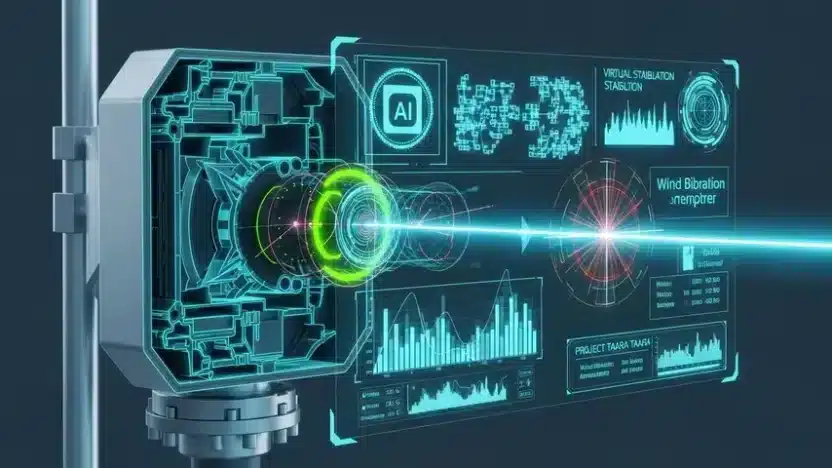
Update 2026: The partnership between Alphabet, Airtel, and laser technology has evolved into a blueprint for modern connectivity. This case study explores how Project Taara is delivering internet service in remote areas using AI-driven lasers.
Delivering high-speed internet to rural landscapes has always been expensive. However, the collaboration where Google’s parent Alphabet and Airtel bet on laser technology changed the game. By utilizing beams of light instead of cables, they unlocked a solution for the “last-mile” connectivity crisis.
For tech enthusiasts and AI developers visiting wRock.org, understanding this infrastructure is key. Why? Because without this Alphabet Airtel laser technology, the AI revolution cannot reach the next billion users.
🚀 What You Will Learn:
- How Alphabet and Airtel utilize Free Space Optical Communications (FSOC).
- Why laser technology is cheaper than fiber optics.
- The critical role of AI in stabilizing laser beams.
How Alphabet and Airtel Use Laser Technology
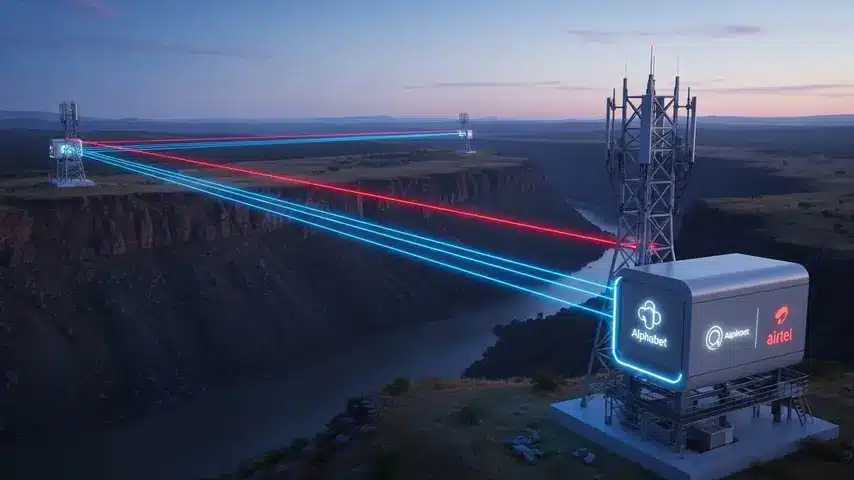
The core of this initiative is Project Taara. Unlike traditional towers that broadcast radio waves, Taara terminals transmit data using narrow, invisible beams of light. This is the heart of the Alphabet Airtel laser technology bet.
1. The Bandwidth Breakthrough
This laser link can transmit up to 20 Gbps over distances of 20 kilometers. To put that in perspective, that is faster than most residential fiber connections in cities. This speed makes it possible to deliver internet service in remote areas without digging a single trench.
2. Why Not Just Use Fiber?
Laying fiber optic cables requires physical digging, rights-of-way permits, and massive labor costs. In contrast, the Alphabet Airtel laser technology units are mounted on existing towers. This reduces deployment time from months to days.
The AI Secret: Stabilizing the Lasers
You might ask: “What happens if a bird flies through the laser?” or “What if the tower shakes?” This is where Artificial Intelligence proves why the Alphabet and Airtel bet on laser technology was a smart move.
“The system uses machine learning to automatically adjust the mirrors inside the terminal, correcting for wind vibration and thermal expansion in real-time.”
At wRock.org, we analyze how AI interacts with hardware. In this case, AI acts as the “steady hand” that keeps the optical link active, ensuring 99.9% uptime for the internet service in remote areas.
Real-World Impact: India and Africa
The deployment has seen massive success. By bridging the gap across rivers (like the Congo River) and dense urban slums, the Alphabet Airtel laser technology partnership has connected schools, hospitals, and local businesses that were previously offline.
Frequently Asked Questions
Is Project Taara better than Starlink?
They serve different purposes. Starlink (Satellite) covers massive areas but has higher latency. The Alphabet Airtel laser technology (FSOC) provides fiber-like speeds for point-to-point backhaul links, making it ideal for connecting cell towers.
Does rain affect the laser internet service?
Heavy fog and rain can attenuate the signal. However, Alphabet’s AI algorithms dynamically adjust the laser power to compensate, ensuring reliable internet service in remote areas.
Why is wRock covering this tech?
Because wRock focuses on the intersection of AI and Infrastructure. The intelligent algorithms powering these lasers are the same types of AI systems we discuss in our developer guides.
Want to learn more about AI infrastructure? Explore our AI & Tech Guides.


