

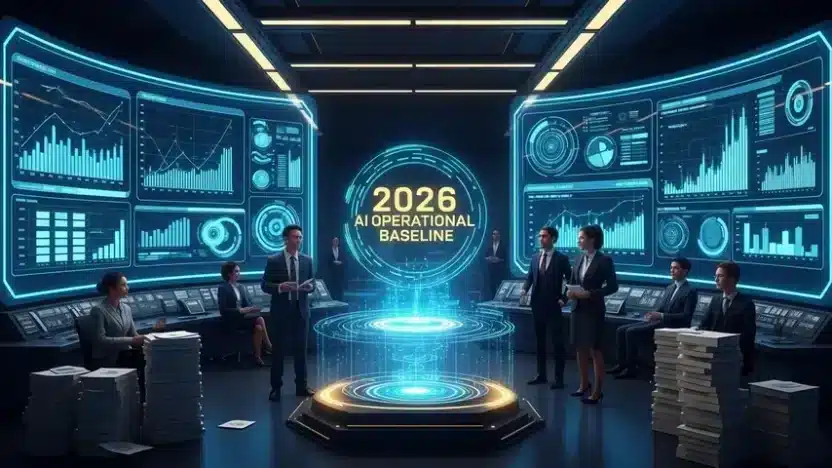
The AI revolution is no longer a prediction found in whitepapers; it is the operational baseline for modern enterprises. While 2024 was marked by experimentation and the initial adoption of generative models, 2026 has ushered in an era of integration and dependency. For business leaders, the question has shifted from “Should we adopt AI?” to “Which AI infrastructure will prevent us from becoming obsolete?”
In this commercial review, we investigate how the ongoing AI revolution is restructuring management hierarchies, optimizing decision-making protocols, and redefining productivity. We will analyze the specific tools driving this change and evaluate the strategic pivots necessary for survival in a machine-augmented marketplace.
The Evolution of Management: From Administration to Orchestration
Historically, business management involved a significant amount of administrative overhead—scheduling, monitoring, reporting, and resource allocation. The current AI revolution effectively automates these “lower-cognitive” tasks, pushing human managers toward a new role: orchestration.
Today’s most effective managers do not spend hours compiling Excel sheets. Instead, they leverage AI-driven dashboards that offer real-time predictive analytics. This shift allows leadership to focus on high-value activities such as mentorship, creative strategy, and ethical governance.
However, the speed of this transition varies by company size. While legacy enterprises often struggle with bureaucratic inertia, agile newcomers are moving much faster. To understand the pace of this change, it is valuable to examine how startups leverage AI to disrupt traditional business models. Their aggressive adoption strategies often serve as a roadmap for what larger corporations will implement 12 to 18 months later.
Top AI Tools Revolutionizing Business Operations (2026 Review)
To navigate the AI revolution successfully, businesses must curate the right technology stack. Below, we review three critical categories of AI tools that are currently reshaping the commercial landscape.
1. Intelligent Project Management (IPM) Systems
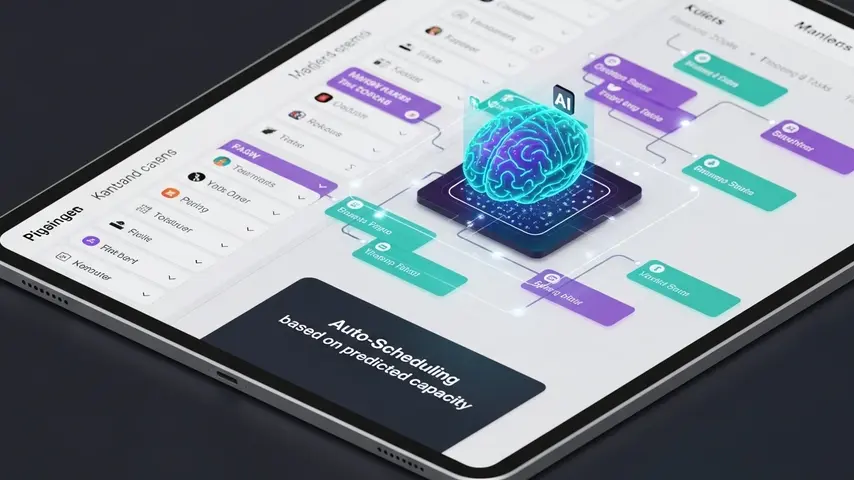
Traditional project management tools like Trello or basic Asana setups are reactive—they record what has happened. The new generation of IPM tools is proactive.
- Top Contenders: ClickUp Brain, Motion, and Asana Intelligence.
- The Commercial Value: These platforms use the AI revolution to predict project delays before they occur. By analyzing historical team velocity, the AI can automatically re-assign tasks, adjust deadlines, and flag burnout risks without human intervention. This capability alone can recover up to 20% of a manager’s workweek previously lost to “micromanagement.”
2. AI-Driven Decision Support Systems (DSS)
Data paralysis is a common bottleneck in management. Executives often have too much data and not enough insight. Modern DSS tools bridge this gap using Natural Language Processing (NLP).
- Top Contenders: Tableau Pulse, Microsoft Copilot for Power BI.
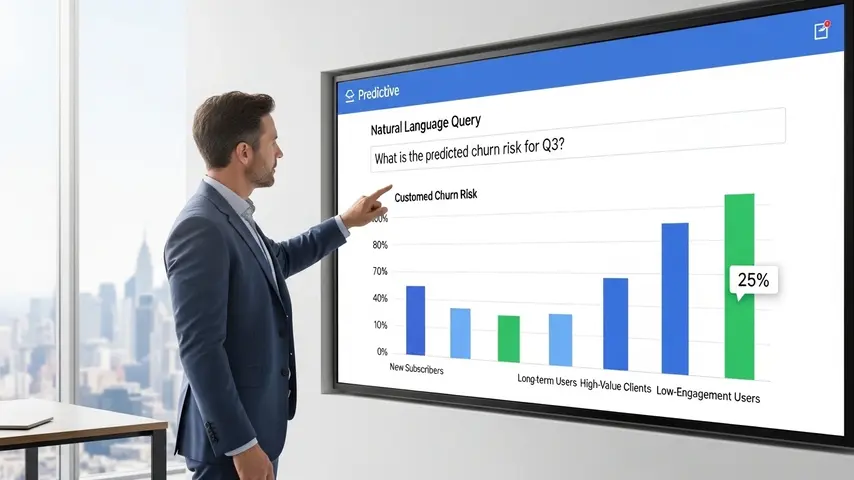
- The Commercial Value: Instead of waiting for data scientists to build queries, managers can now ask plain-language questions like, “Which region is most likely to churn next quarter?” The AI instantly visualizes the answer. This democratization of data is a cornerstone of the AI revolution, empowering non-technical managers to make data-backed decisions instantly.
3. Automated Talent & HR Intelligence
Recruitment and retention are arguably the most expensive aspects of management. AI is reducing these costs through predictive modeling.
- Top Contenders: Eightfold AI, Lattice.
- The Commercial Value: These platforms analyze the skills of current employees and match them against future company needs, identifying gaps automatically. Furthermore, they can screen thousands of resumes in minutes to surface candidates that match the specific cultural and technical fit of the organization, removing unconscious bias from the initial screening process.
Strategic Implementation: Surviving the Transition
Investing in tools is only the first step. The failure rate of AI adoption in management often stems from a lack of cultural readiness, not software capability.
The “Human-in-the-Loop” Protocol
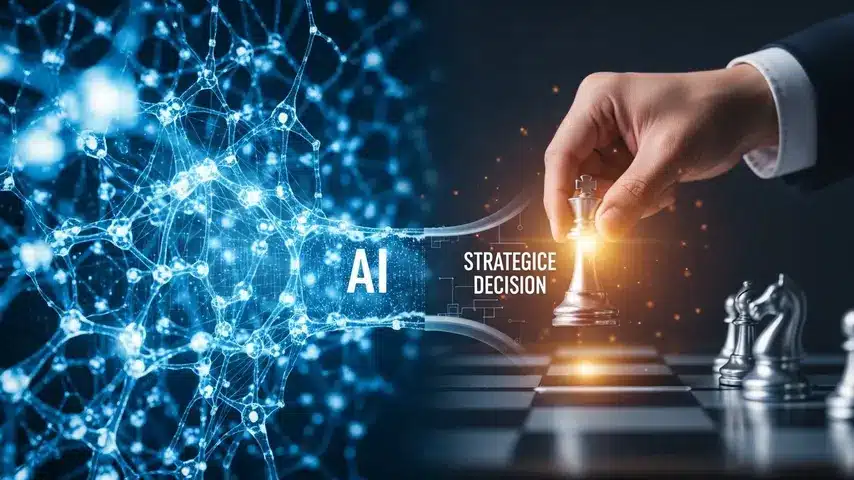
Despite the power of the AI revolution, total automation is rarely the answer for high-stakes business management. The most successful implementations utilize a “Human-in-the-Loop” (HITL) approach. In this model, AI gathers data, analyzes scenarios, and proposes options, but a human manager makes the final strategic decision. This ensures that ethical considerations and brand nuances—which AI often misses—are preserved.
Data Governance as a Asset
Your AI is only as intelligent as the data it is fed. Businesses must treat their internal data (emails, customer logs, project history) as a proprietary asset. Before deploying enterprise AI, management must invest in cleaning and structuring this data. In the AI revolution, “Data Governance” is no longer an IT ticket; it is a C-suite priority.
Conclusion: The New Standard of Competence
The AI revolution in business management is not a temporary trend; it is a fundamental restructuring of how value is created. Managers who resist these tools risk becoming administrative bottlenecks in an otherwise automated workflow.
By adopting the tools reviewed above—from Intelligent Project Management to Predictive HR analytics—leaders can transition from managing tasks to leading innovation. As we move deeper into the decade, the divide will not be between managers who work hard and those who don’t, but between managers who leverage AI and those who compete against it.
Frequently Asked Questions (FAQ)
What is the biggest impact of the AI revolution on middle management?
The AI revolution shifts middle management from supervision to strategy. AI takes over the “monitoring” aspects (tracking hours, status updates), forcing managers to focus on “coaching” aspects (team alignment, conflict resolution, and innovation).
Is the AI revolution replacing business managers in 2026?
No, it is replacing tasks, not roles. However, managers who utilize AI tools will likely replace those who do not. The skillset required for management is changing from “organization” to “AI-orchestration.
Which AI tools are best for small business management?
For small businesses, integrated platforms offer the best ROI. Tools like Notion AI for knowledge management, ChatGPT Team for communications, and HubSpot for customer management allow small teams to operate with the efficiency of large enterprises.
How does AI improve decision-making in business?
AI eliminates “gut feeling” bias by processing vast datasets instantly. It can identify patterns, forecast market shifts, and simulate outcomes (Scenario Planning), allowing managers to make decisions based on probability rather than intuition.


